c. 1550 – 717 BCE · EASTERN MEDITERRANEAN & NEAR EAST
The World at the Brink
A step-by-step atlas of the Bronze Age Collapse — how a world of great kings, copper ships and clay letters came apart within a single lifetime, and what was built from the ruins.
Not only why the Bronze Age world fell, but why nobody could stop it. Fourteen chapters follow the great kings, the tin road, the drought, the fall of Ugarit and Hattusa and the long recovery, and end with five practical lessons for our own connected world.
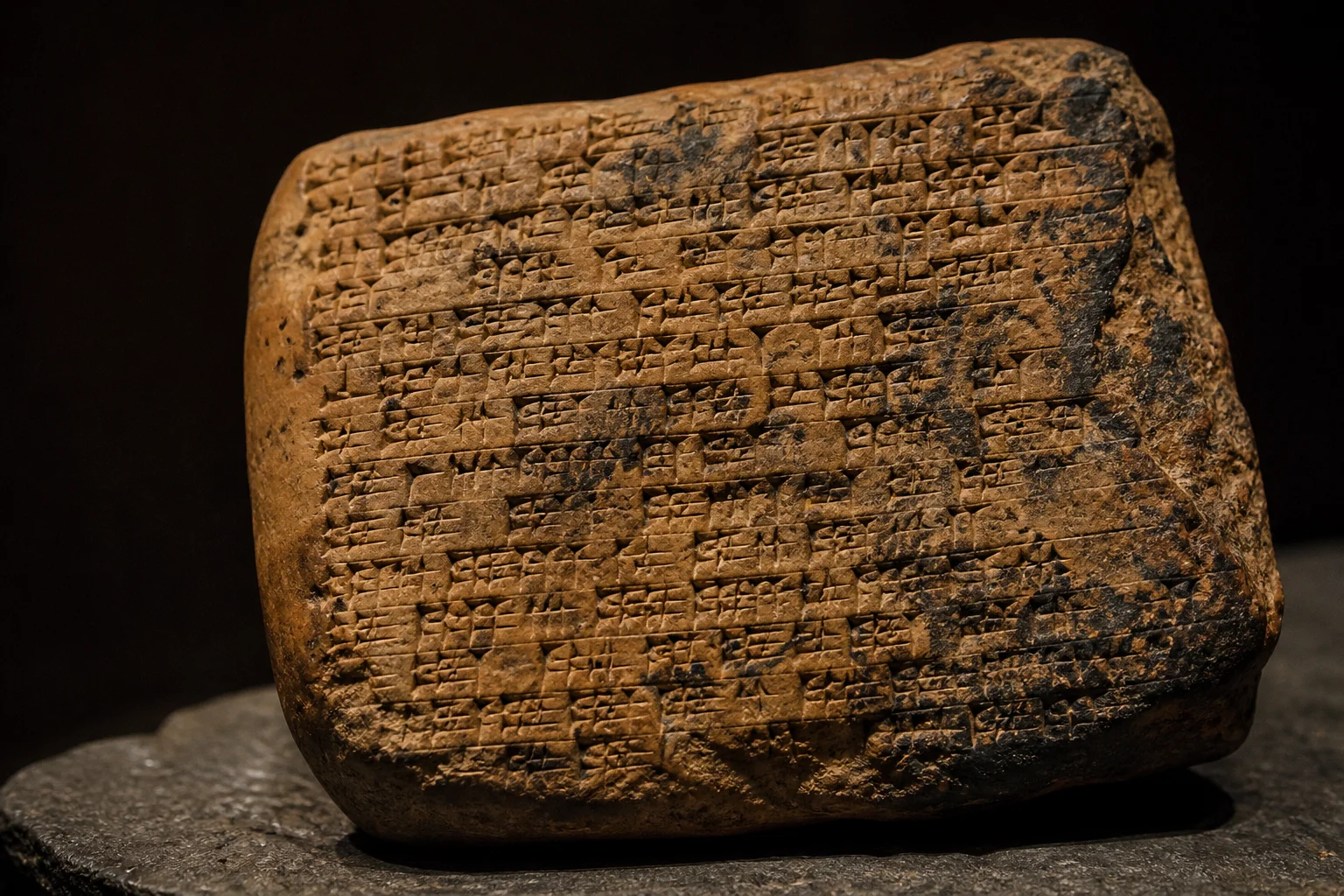
Illustrative tablet. Ammurapi’s letter is catalogued as RS 20.238.
PROLOGUE · UGARIT · c. 1190 BCE
The Last Letter
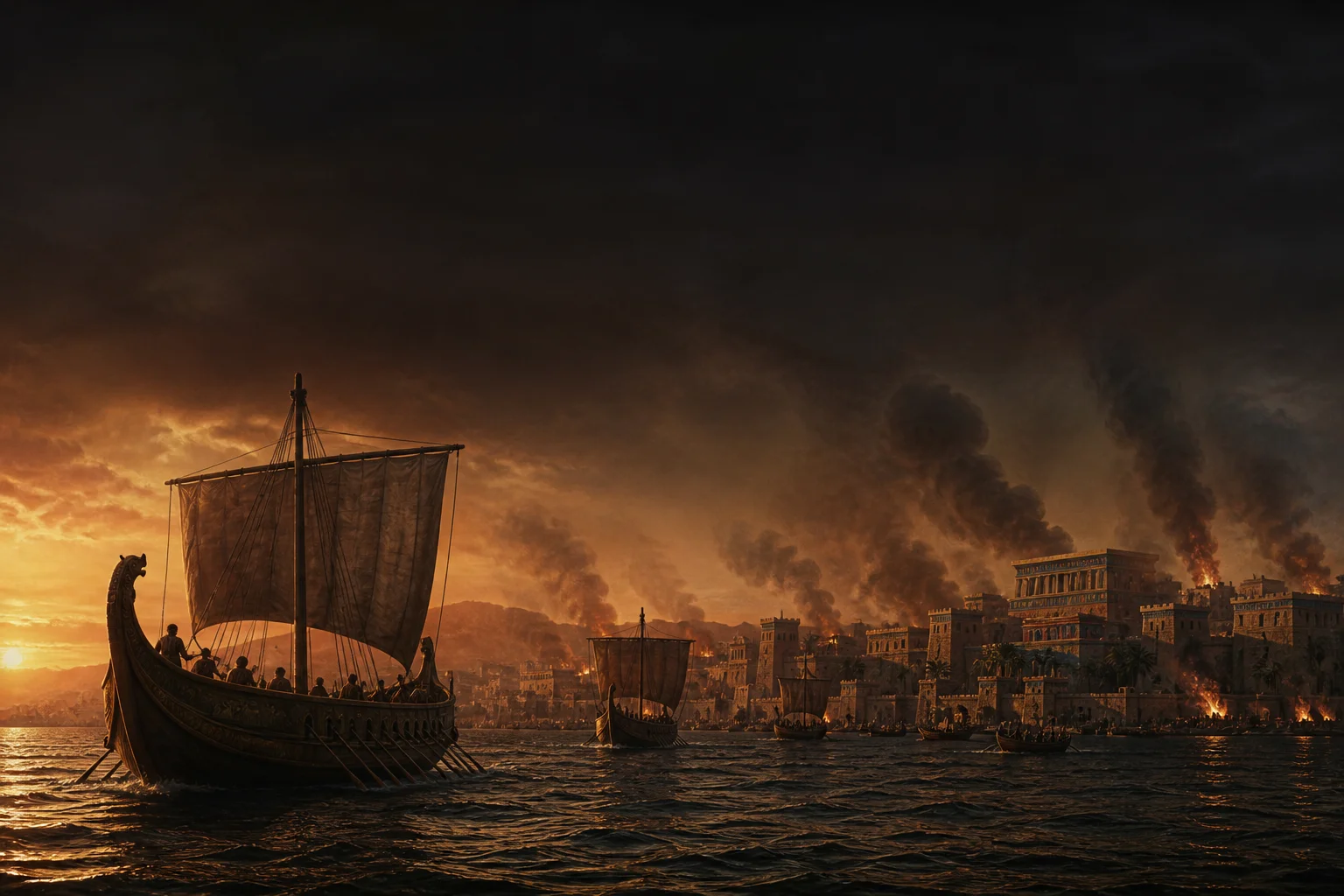
“My father, the enemy’s ships have come. My towns have been burned, and they have done evil things in my land. Does my father not know that all my troops and chariots are in the land of Hatti, and all my ships are in the land of Lukka? They have not yet come back, so the country is left to itself… If there are more enemy ships, send me word, so that I may know.”
Ammurapi, the last king of Ugarit, wrote to the king of Alashiya — Cyprus. His city was one of the best-connected on earth. In its last days those very connections had taken its soldiers and ships somewhere else. We have the king’s words; we do not know whether they reached anyone.
THE CHRONICLE · STEP BY STEP
An Atlas of the Collapse
Walk the era one step at a time. Each step places an event on the map, explains it, and cites where it appears in the book. Destroyed centres stay marked as you go.
LISTEN FIRST
The Brink — audio teaser
LISTEN BEFORE YOU STEP IN
The Brink — audio teaser, with violin
0:00
0:00
The teaser stops at the edge. The book tells what happened next.
Long before the Late Bronze Age, Assyrian merchants based at Kanesh in Anatolia ran the overland tin trade. Bronze needs tin, and tin came from mines at the far edges of the known world — a dependency that would shape every kingdom that followed.
The Brink — Timeline · Ch. 2, The Tin Road
Tip: use the ← → keys, or click any place on the map.
WHY DID IT FALL?
Not One Cause, but Many at Once
Each old explanation had some evidence behind it; none has survived the last thirty years of research on its own. Tree rings, lake sediments, metal chemistry and reread texts point instead to several stresses arriving close together inside a tightly linked world.
Sea Peoples aloneAn earthquakeA volcanoA revolution in warfareInternal rot of over-taxed palaces
01
Years of drought
A drier period, with three consecutive years of severe drought recorded in tree rings at Gordion, c. 1198–1196.
02
Hunger
Grain became “a matter of life and death”; at Emar families sold themselves in the “year of hardship”.
03
Strain within and between states
Loyalty oaths, rival claimants, embargoes, and Assyria’s wars against Hatti and Babylon.
04
Broken trade routes
A bronze economy depended on Cypriot copper and distant tin carried by sea and caravan.
05
Desperate people on the move
Raiders and migrating families — including those Egypt called the “Sea Peoples”.
THE BOOK’S ARGUMENT · THE RESCUE PARADOX
“Connected societies become most vulnerable when their demands for help rise together, while their usable reserves, trusted partners and capacity to improvise shrink.”
For three centuries connection was a safety net: Egypt shipped grain to a hungry Hatti, and the empire recovered from plague. Around 1200 the same links began to carry failure instead of help.
DRAMATIS PERSONAE
Cast of Characters
Kings who wrote as brothers, workmen who went on strike, and the excavators who brought their words back.
Burnaburiash II
Kassite king of Babylon, who melted down Pharaoh’s gold.
Tushratta
King of Mitanni, who sent his daughter to Egypt and wanted gold statues.
Rib-Hadda
King of Byblos, author of some sixty letters begging Pharaoh for help.
Mursili II
Hittite king, author of the Plague Prayers.
Ramesses II
Pharaoh of Kadesh and the peace treaty.
Hattusili III & Puduhepa
The usurping Hittite king and his formidable queen.
Tudhaliya IV
The anxious king of the loyalty oaths and the embargo.
Merneptah
Pharaoh who sent grain “to keep alive the land of Hatti.”
Suppiluliuma II
The last known Hittite Great King.
Ammurapi
The last king of Ugarit, author of the “last letter.”
Ramesses III
Pharaoh who fought the Sea Peoples in 1177 and was later murdered.
Kuzi-Teshub
Ruler of Carchemish who carried on the Hittite royal line.
V
PART V · NOW
Five Lessons from the Brink
History does not repeat. But systems have shapes, and shapes recur — the Late Bronze Age is worth studying not as prophecy but as evidence.
I
Keep buffers where an interruption would be catastrophic.
II
Find the dependencies that fail together.
III
Protect the capacity to recover.
IV
Plan for people on the move.
V
Keep knowledge where failing institutions cannot take it with them.
“The most important fact about the collapse is not that it happened but that people survived it.”